We are currently in the process of delivering our 2025 emission reports to customers across Sweden, Denmark, Norway, Finland and Poland.
As regulatory requirements increase and expectations from customers and stakeholders continue to rise, emissions reporting has evolved from a compliance task into a strategic business tool. Greater data transparency and continuous monitoring are now essential for tracking progress and enabling real emission reductions throughout supply chains.
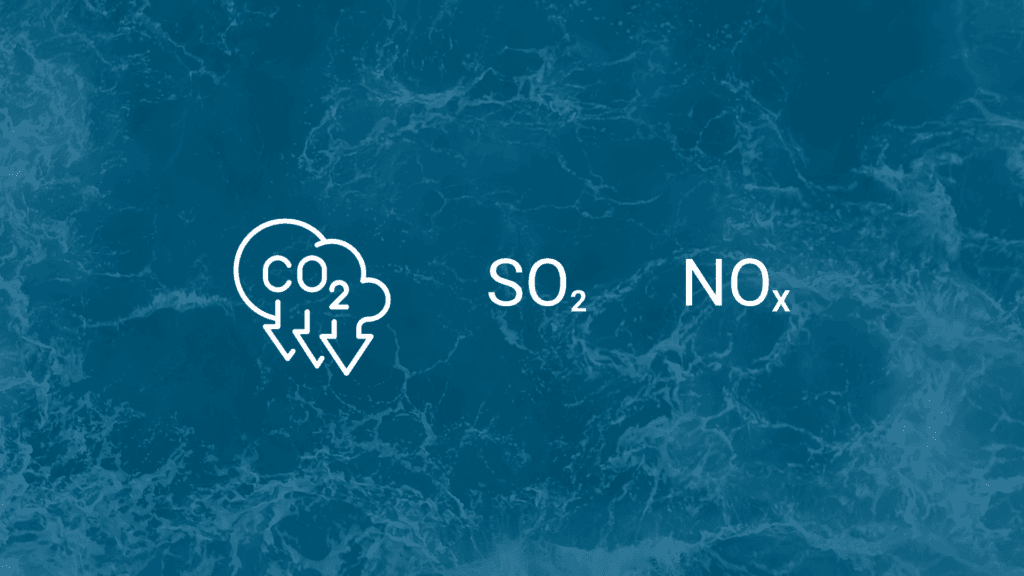
Just like last year, the 2025 emission report provides an overview of customer emissions across key parameters, including carbon dioxide (CO₂), sulfur dioxide (SO₂), and nitrogen oxides (NOₓ). By measuring and reporting these emissions, we increase transparency, support informed decision-making, and strengthen collaboration aimed at reducing the environmental impact of logistics operations.
“This year, we are taking the next step. Along with each customer emission report, we present a clear and concrete offer to reduce emissions using our emission reduction services—Maritime Biofuel Insets and SAFc—tailored to the customer’s specific emission profile. By directly linking emissions data to actionable solutions, we make it easier for our customers to take the next step toward more sustainable logistics,” says Patrik Westraeus, Head of Sustainability.
Together with our customers and partners, we aim to accelerating the transition toward a more sustainable logistics sector.
Are you shipping sea freight?
Learn more about how maritime biofuel insets works.
Are you using air freight?
Learn more about how SAFc works.
Reliable and standardized emission calculations
The emission reports are compiled using EcoTransIT World, one of the leading global tools for logistics emission calculations. EcoTransIT World applies a well-established methodology in accordance with ISO 14083, ensuring accuracy and credibility in emission reporting.