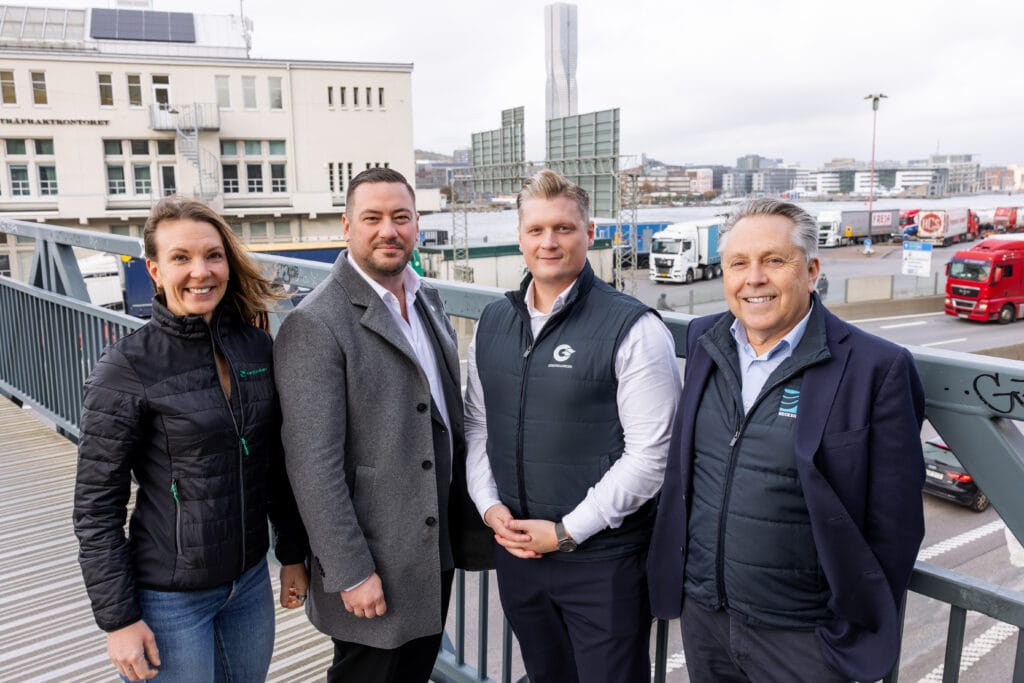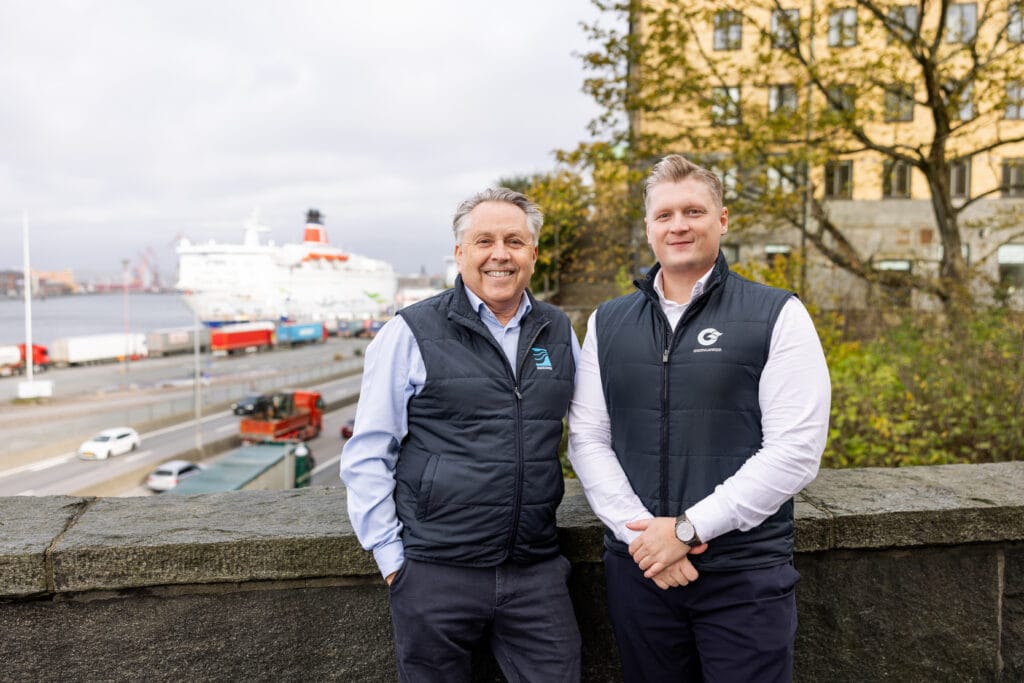
With a new HVO100 solution for road freight, Hecksher can now offer a reduced climate footprint across all three major modes of transport: sea, air and road freight. For CEO Niklas Olsson and Head of Sustainability Patrik Westraeus, the initiative is a logical step towards making more sustainable transport an integral part of the logistics business.
Hecksher already offers insetting solutions for sea and air transport: Maritime Biofuel Insets and SAF certificates. These are now being complemented by HVO100 for road transport, based on the same fundamental principles.
“We have long been working towards a more sustainable logistics option for each mode of transport. Now we are putting the final piece of the puzzle in place and can offer solutions for all three major modes,” says Patrik Westraeus, Head of Sustainability at Hecksher and Greencarrier.
Patrik adds that the initiative is relevant both to road-only transport and to multimodal transport chains, where sea freight, for example, is combined with road transport.
Climate benefits can be allocated without the fuel following the goods
The solution is based on what is known as a Book & Claim model. HVO100 is introduced into the road transport system, replacing fossil diesel, but the fuel does not need to be used in the specific truck carrying the customer’s goods. Instead, the emissions reduction is allocated to the customer purchasing the service.
“The key flexibility is that the physical fuel can be used to refuel vehicles somewhere else entirely within the transport system. We separate the climate benefit from the fuel itself and can then make that benefit available to the customer,” Patrik explains.
Customers choose which road shipments the solution should cover, over what period and what proportion of their shipments should be included. The emissions reduction is then calculated and documented in carbon dioxide equivalents (CO₂e). The HVO100 currently used in the solution produces approximately 90 per cent lower greenhouse gas emissions than fossil diesel over the fuel’s life cycle. This comparison concerns the fuel, not the total emissions of the transport operation.
For the transport buyer, the climate benefit is linked to Scope 3, which covers indirect emissions from sources including purchased transport services. How the reduction may be reported depends on the applicable accounting rules.
The idea is for customers’ purchases to contribute to increased use of renewable fuel in the road transport system in place of fossil diesel. Patrik also emphasizes the distinction from conventional carbon offsetting.
“Insetting is about achieving emissions reductions within your own value chain. Carbon offsetting takes place outside the value chain.”
Making sustainability an integral part of buying transport services
For Niklas Olsson, CEO of Hecksher, it is all about making sustainability efforts more tangible. Climate impact should become as natural a consideration in customers’ transport decisions as price and delivery time.
“What matters is moving from reporting climate data and carbon dioxide emissions to actually being able to offer something concrete, right down to individual bookings.”
One challenge is improving understanding of how insetting solutions work. Concepts such as Book & Claim are important for credibility, but can also make the offering difficult to understand.
“Our conversations are almost as much about building understanding as they are about traditional sales. We need to explain both the climate benefit and how it can become part of the customer’s own sustainability efforts,” says Patrik.
Niklas stresses that the solutions must also become a natural part of ongoing dialogue with customers.
“Not everyone needs to understand every technical detail, but customers should know what options are available to them.”
Greater engagement can unlock potential
Patrik describes the response to Hecksher’s earlier insetting solutions as very positive. At the same time, he points out that investment in emissions reductions needs a clearer place in companies’ transport budgets.
He highlights internal carbon pricing as a potential tool for creating financial incentives and funding emissions reductions.
“If companies start putting a monetary value on their emissions, it may become easier to integrate climate action into their business.”
Both Patrik and Niklas also call for a stable, long-term framework that makes it easier for companies to invest.
“I think the economy needs to continue improving, and we need clearer incentives and a longer-term approach from lawmakers,” says Niklas.
Despite challenging market conditions and an uncertain global economy, Hecksher has never doubted the need to continue developing its sustainability offering.
“Perhaps it is precisely in times of global uncertainty that we should invest a little more. That also creates an opportunity to stand out: if our price, service and the other aspects of our offering are at least as good, I hope our sustainability solutions will ultimately be what makes a customer choose us,” says Niklas.
AI and new transport modes can drive the transition
In the longer term, Niklas sees electrification, rail and short sea shipping as important elements of the transport sector’s transition. At the same time, these alternatives must be commercially competitive.
He also sees significant potential in AI and digitalisation to improve load factors, freight consolidation and route planning.
“There is a lot to be gained if we can reduce empty mileage and become better at consolidating freight.”
For Patrik, the new road freight solution is a way to make emissions reductions possible today, while awaiting a more far-reaching transition.
“Many major players have set targets to reach net-zero emissions by 2050. But that is a long way off. We need to ask ourselves what we can do now, rather than waiting for someone else to solve the challenges.”
Niklas concludes with a call to transport buyers:
“Take the opportunity to try. That could mean choosing a different mode of transport, consolidating freight more efficiently or using the new solutions to reduce your climate footprint. The important thing is to start looking at what can actually be done today.”
Ready to explore HVO100? Learn more about this and Hecksher’s other renewable fuel solutions.
This article was originally published in Hållbar omställning and is republished here with permission. Read the original article.